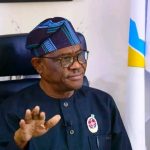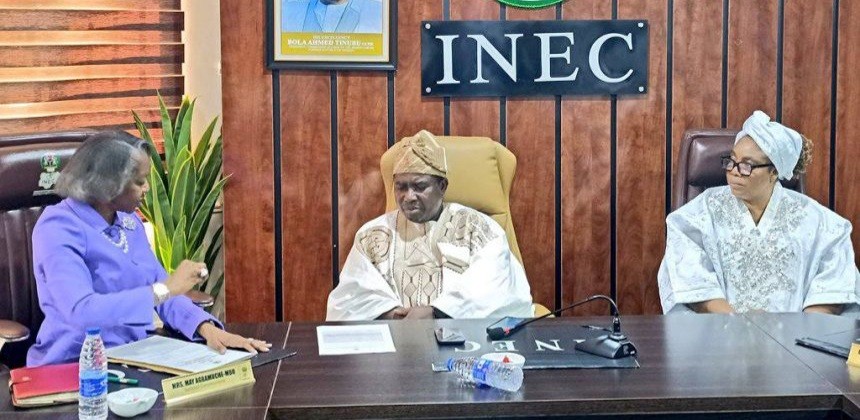
Joash Amupitan did not choose soft words. In his Eid-el-Fitr message to staff, the Independent National Electoral Commission (INEC) chairman described the forthcoming governorship elections in Ekiti and Osun as an “immediate litmus test” for the reforms he has been driving since assuming office in October 2025.
It was the kind of language that carries weight and he is right to use it.
EDITOR’S PICKS
With Ekiti going to the polls on June 20 and Osun on August 8, INEC has less than three months before the first real verdict on its institutional credibility is delivered. Not by politicians. Not by civil society organisations. But by the conduct of the elections themselves.
A Commission That Must Prove Itself
Amupitan inherited an institution bruised by years of disputed results, logistical failures, and a public trust deficit that had become structurally embedded. The 2023 general election, with its contested presidential outcome and the IReV controversy, left millions of Nigerians — particularly younger voters — convinced that the electoral process was, at best, unreliable and, at worst, rigged by design.
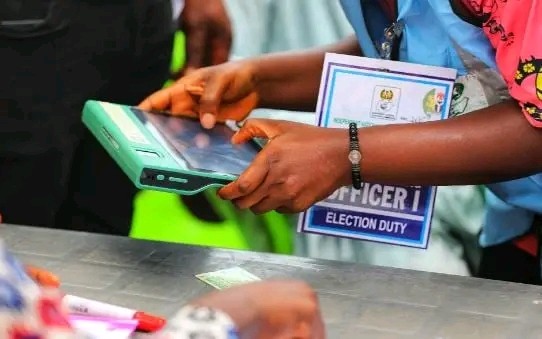
The Electoral Act 2026, under which INEC is now operating, tightens the legal framework around the bimodal voter accreditation system (BVAS) and the result-viewing portal. These are not new technologies; they were deployed in 2023.
What is new is the statutory obligation to use them correctly, and the reputational consequences of failing to do so again. Off-cycle state elections have historically served as the first real rehearsal for general elections, a space where institutional muscle memory is either built or eroded. Ekiti and Osun are that rehearsal.
The Structural Stakes
What makes these two elections particularly telling is their relative manageability. Unlike a general election, which simultaneously strains INEC’s 14,000-strong workforce across 36 states and the FCT, governorship elections in two states offer the commission a controlled environment. If INEC cannot deploy BVAS without disruption, transmit results transparently via IReV, or enforce its own zero-tolerance misconduct policy in Ekiti and Osun, it will have no credible answer when Nigerians ask how it intends to do so across the country in 2027.
The logic is simple: success here does not guarantee 2027, but failure here almost certainly dooms it. Voter apathy, which Amupitan has explicitly identified as a problem to be addressed, is not simply a function of public cynicism. It is a rational response to a system people believe will not reflect their choices. Every election INEC conducts badly deepens that calculation.
Why 2027 Cannot Afford a Dress Rehearsal Gone Wrong
The 2027 general election will be contested in a political climate of exceptional tension. With the governing All Progressives Congress facing pressure on multiple fronts — economic hardship, a restive opposition, and the unresolved question of President Tinubu’s re-election bid — the demand for a credible umpire will be acute.
INEC arriving at that moment with the credibility of Ekiti and Osun behind it is a fundamentally different proposition from arriving having explained away two more contested off-cycle polls.
FURTHER READING
Amupitan framed his Eid message around the virtues of Ramadan: patience, integrity, and empathy. They are the right virtues for the task. But sermons do not conduct elections. Systems do, and people do. What June 20 in Ekiti will test is not Amupitan’s rhetoric — it is whether the institution he leads has genuinely changed, or whether the language of reform is itself the latest thing Nigerians cannot afford to believe.
Philip Ibitoye is a Special Correspondent with EKO HOT BLOG. Click here to find daily analysis and critical insight on trending issues in Lagos and other parts of Nigeria.
Click to watch the video of the week below: