- During a cabinet meeting on Thursday, President Trump expressed disappointment in Australia’s level of assistance, stating, “Australia was not great… I was a little surprised.”
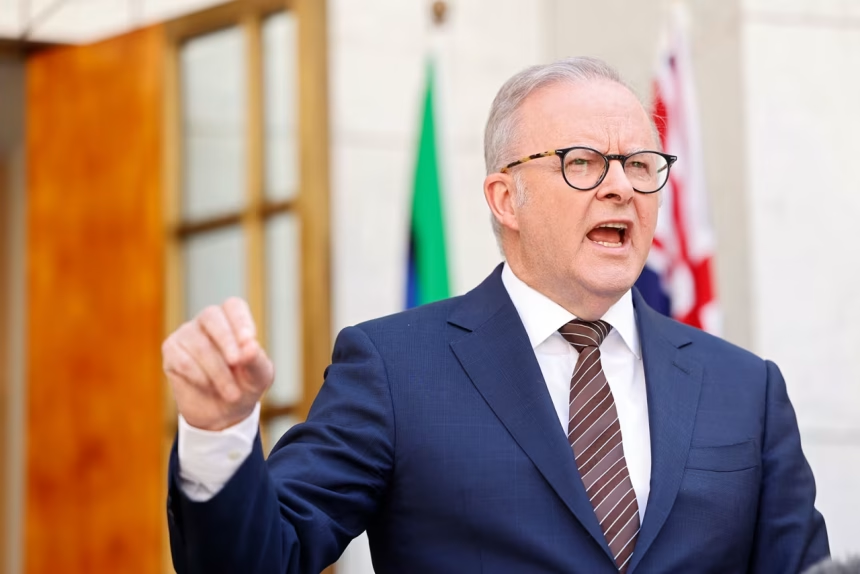
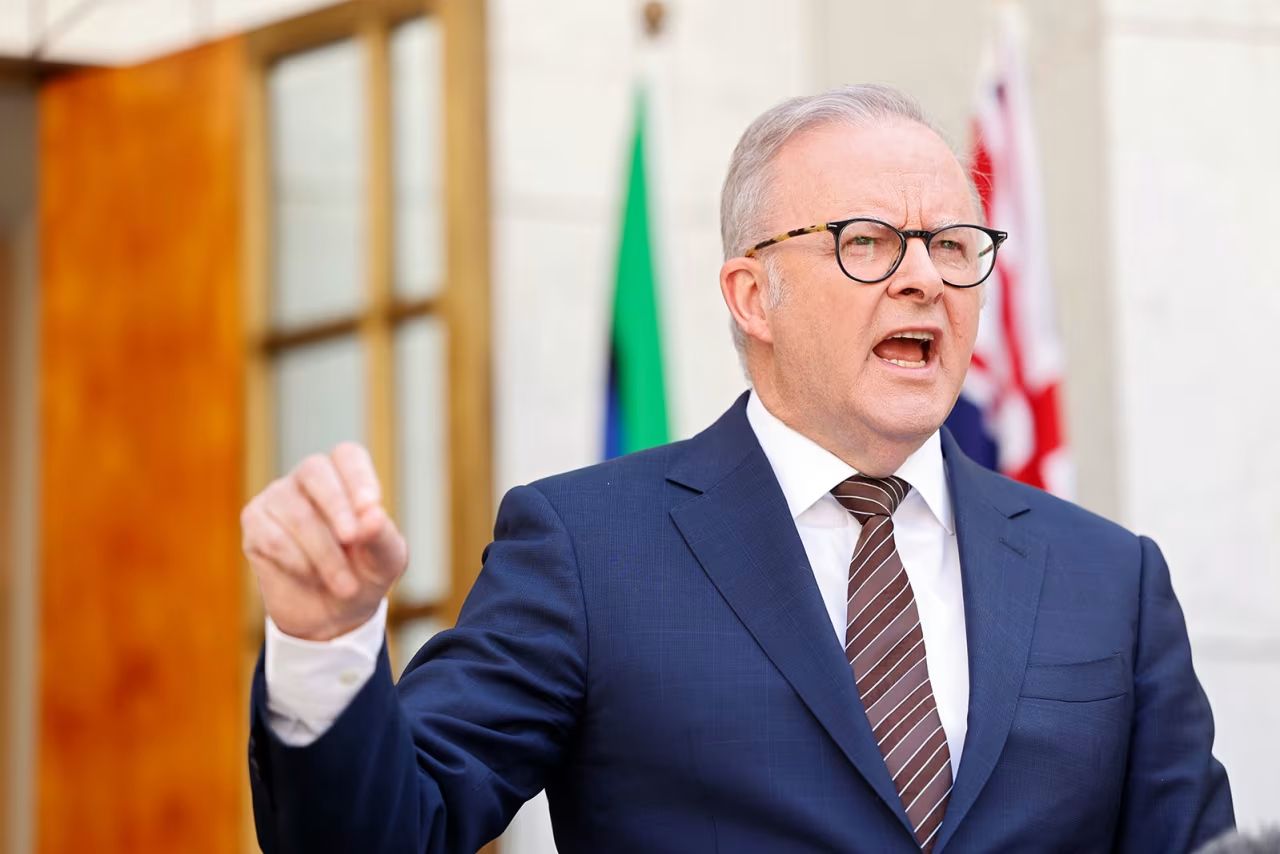
- Prime Minister Anthony Albanese clarified on Friday that Canberra has agreed to every formal request received, but noted that a direct US request for naval support in the Strait of Hormuz was never made.
- Australia’s current military contribution is limited to an E-7A Wedgetail surveillance plane deployed to the UAE for defensive reconnaissance, with the government ruling out sending warships.
President Donald Trump singled out Australia, along with the UK and NATO allies, for what he perceived as a lack of military support in the US-Israeli conflict with Iran.
Eko Hot Blog reports that speaking at a White House cabinet meeting on Thursday, March 26, 2026, Trump voiced his frustration with long-standing allies, suggesting that they only offered to send help “after the war is over” rather than during the heat of the conflict.
EDITOR’S PICKS
- Judge Frees 37 Inmates Over Prolonged Detention in Akwa Ibom
- Trump Threatens Iran Over Energy Attacks
- Tinubu Excludes Kemi Badenoch from UK State Visit Itinerary
He described the international response as “not great,” specifically highlighting his surprise at Australia’s cautious stance.
Prime Minister Anthony Albanese responded to the remarks during a press conference in Canberra on Friday morning, March 27.
While maintaining that he enjoys a “constructive relationship” with the US President, Albanese stood firm on Australia’s sovereign decision-making.
He emphasized that Australia was not consulted prior to the initial US-Israeli strikes on Iran and argued that the government cannot be blamed for rejecting requests that were never officially filed.
“There is no request being made to Australia that has not been agreed to,” Albanese stated, reinforcing that Australia’s primary focus remains the security of its 115,000 citizens in the Middle East and regional stability in the Indo-Pacific.
Currently, Australia’s involvement is defined by the deployment of a Royal Australian Air Force E-7A Wedgetail, which arrived in the UAE earlier this month.
The “flying radar” is tasked with monitoring the Persian Gulf to protect civilian infrastructure from Iranian drone and missile strikes.
Despite Trump’s call for a multinational naval coalition to reopen the Strait of Hormuz, the Albanese government has confirmed it will not dispatch warships, citing a lack of naval capacity and the high risk of further regional escalation.
As oil prices continue to fluctuate due to the maritime standoff, the rift highlights a growing tension between Trump’s “America First” military expectations and the strategic autonomy of his closest Pacific ally.