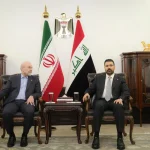
- Israeli Prime Minister Benjamin Netanyahu has explicitly stated that the newly announced two-week ceasefire between the United States and Iran does not extend to Lebanon, contradicting earlier claims by international mediators.
- The Israel Defense Forces (IDF) have intensified strikes across southern Lebanon and the Tyre region, issuing fresh evacuation orders and declaring that the “battle in Lebanon is ongoing” regardless of regional truces.
- While Pakistani Prime Minister Shehbaz Sharif asserted the ceasefire applies “everywhere,” Lebanese officials report they have received no formal notification of their inclusion in the agreement.
The hope for a comprehensive regional peace was met with a stark reality on Wednesday as Israeli airstrikes thundered across southern Lebanon, even as a broader ceasefire between Washington and Tehran took effect.
Eko Hot Blog Prime Minister Benjamin Netanyahu’s office clarified that Israel’s agreement to pause strikes against Iranian targets does not inhibit its operations against Hezbollah.
EDITOR’S PICKS
- Judge Frees 37 Inmates Over Prolonged Detention in Akwa Ibom
- Trump Threatens Iran Over Energy Attacks
- Tinubu Excludes Kemi Badenoch from UK State Visit Itinerary
This stance creates a dangerous disconnect in the Middle East, with Lebanese authorities and citizens caught in a “gray zone” of uncertainty.
While Hezbollah has not claimed any military operations since early Tuesday morning, the IDF continues to push deeper into Lebanese territory, hitting targets in Tyre, Sidon, and the Bekaa Valley.
The discrepancy in the ceasefire’s scope has led to widespread confusion on the ground. Pakistani Prime Minister Shehbaz Sharif, a key mediator in the conflict, took to social media to hail an “immediate ceasefire everywhere,” specifically mentioning Lebanon.
However, Netanyahu’s immediate rebuttal and the subsequent Israeli strikes have left Lebanese civilians in a precarious position.
In Beirut’s southern suburbs and southern border towns, the streets remain largely deserted; while some displaced families attempted to return home on motorcycles and in cars, the Lebanese military has warned them to stay back, citing the high risk of ongoing aerial bombardment.
International pressure is mounting to close the gap in the truce. French President Emmanuel Macron and other European leaders have expressed a desire for the ceasefire to “fully include Lebanon” to prevent further humanitarian catastrophe.
According to Lebanese health authorities, the conflict has already claimed over 1,500 lives and displaced more than a million people in recent weeks alone.
Shortly before the ceasefire was officially announced, an Israeli strike on the city of Sidon claimed eight lives, a grim reminder of the lethality still present in the region despite diplomatic breakthroughs elsewhere.
For residents like 50-year-old delivery worker Ali Youssef, the situation is a test of both survival and political loyalty.
Many are waiting for an official statement from Hezbollah or further clarity from Tehran before making any move to reclaim their homes.
As the two-week window for the U.S.-Iran negotiations begins, the persistent violence in Lebanon serves as a volatile variable that could derail the fragile regional de-escalation if the fighting continues to intensify or spills back over the border into a full-scale regional confrontation.