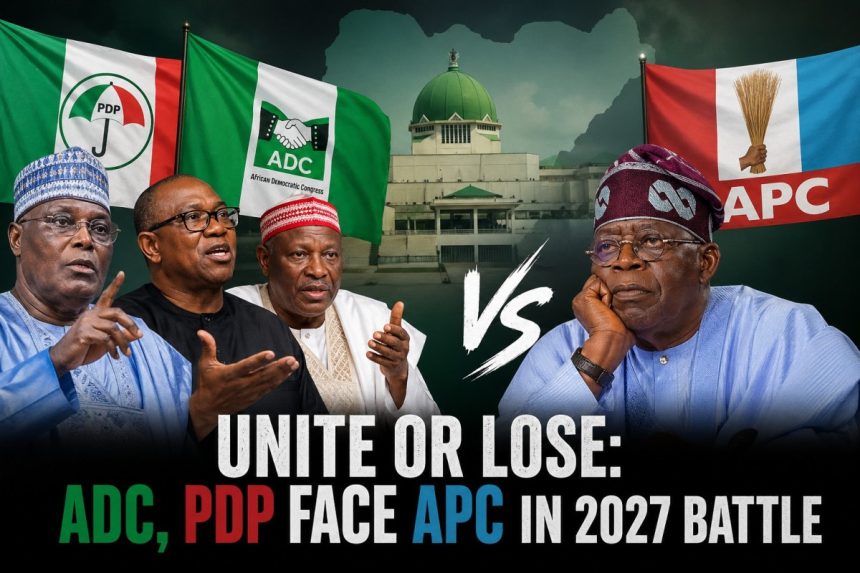
At the centre of this shift is a growing alignment between the Peoples Democratic Party (PDP) and the African Democratic Congress (ADC), a potential coalition that aims to directly challenge the dominance of the ruling All Progressives Congress (APC).
EDITOR’S PICK
- Lassa Fever Hits Oyo, Government Activates Emergency Response
- Bruno Fernandes Reveals Why He Rejected a Huge Al Hilal Move
- FG Defends Borrowing Strategy
For years, the opposition has struggled less with relevance and more with cohesion. Repeated electoral cycles have shown that fragmented candidacies and internal disputes often weaken their chances long before votes are cast. That pattern has consistently worked in favour of the APC, allowing it to consolidate power even in the face of economic concerns and governance criticisms.
What is unfolding now appears to be a deliberate attempt to avoid that familiar trap by building a unified political front.
The Ibadan engagements and the broader conversations around coalition building suggest a recognition that no single opposition party can unseat the APC alone.
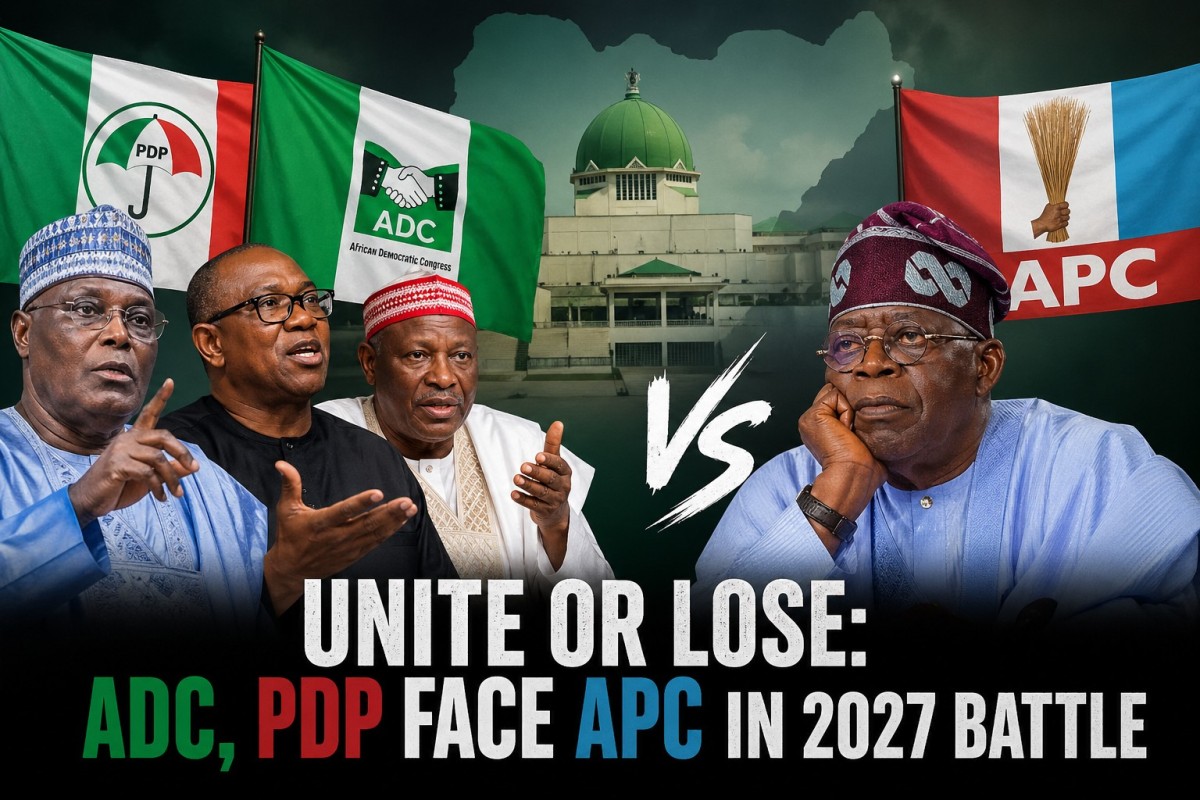
The idea of presenting a joint presidential ticket one candidate and one running mate is therefore gaining traction as both a strategic necessity and a political gamble. Key figures such as Atiku Abubakar, Peter Obi, and Rabiu Musa Kwankwaso remain central to this conversation, each bringing influence, structure, and loyal voter bases that could prove decisive if properly aligned.
Yet, even as the opposition attempts to unite, the APC is not standing still. Under President Bola Ahmed Tinubu, the ruling party has continued to expand its political reach, consolidating relationships with state governors and strengthening its foothold across key regions.
The growing alignment of governors with the APC, whether through party membership, political cooperation, or strategic alliances, has reinforced the party’s grassroots machinery and electoral advantage.
In Nigeria’s political system, where governors play a critical role in mobilising resources and influencing voter behaviour at the state level, this advantage cannot be underestimated.
This reality raises the stakes for the ADC and PDP coalition. It is not merely contesting against a party in power, but against a deeply entrenched political structure with nationwide reach and institutional leverage. To counter this, the opposition must not only unite it must do so convincingly and sustainably.
However, the biggest test lies within. Forming a coalition is one challenge managing it is another entirely. The question that continues to linger is both simple and complex: how will the ADC and PDP agree on a single presidential candidate and a running mate without reigniting the very internal disputes that have weakened them in the past
Can long-standing rivals truly set aside ambition for a shared goal?
- Who concedes the presidential ticket and on what basis: experience, popularity, regional balance, or electoral viability
- If one bloc produces the presidential candidate, will the other accept the vice presidential slot without resistance?
And perhaps most critically, can both parties maintain internal discipline long enough to present a united front to the electorate
These are not theoretical concerns. The PDP continues to grapple with internal fractures, while the ADC’s openness, though an advantage, also exposes it to competing interests and ambitions. Without clear agreements on leadership zoning and power sharing, the coalition risks collapsing under the same pressures it seeks to overcome.
Still, the urgency driving this alignment is unmistakable. Economic challenges, public dissatisfaction, and shifting political sentiments are creating an environment the opposition believes is ripe for change.
By framing their coalition as both a political necessity and a democratic imperative, they hope to appeal not just to party loyalists but to a broader electorate seeking credible alternatives.
As 2027 draws closer, Nigeria appears to be moving toward a more defined electoral contest, a ruling party with consolidated power and growing gubernatorial backing on one side and an opposition bloc attempting to reinvent itself through unity on the other
Whether the ADC and PDP can transform their shared ambition into a disciplined, cohesive alliance and answer the hard questions around leadership and trust will ultimately determine if this emerging coalition becomes a genuine threat to the APC or just another missed opportunity in Nigeria’s political history.
FURTHER READING