The Lagos State Government made an announcement over the weekend that was equal parts promising and telling.
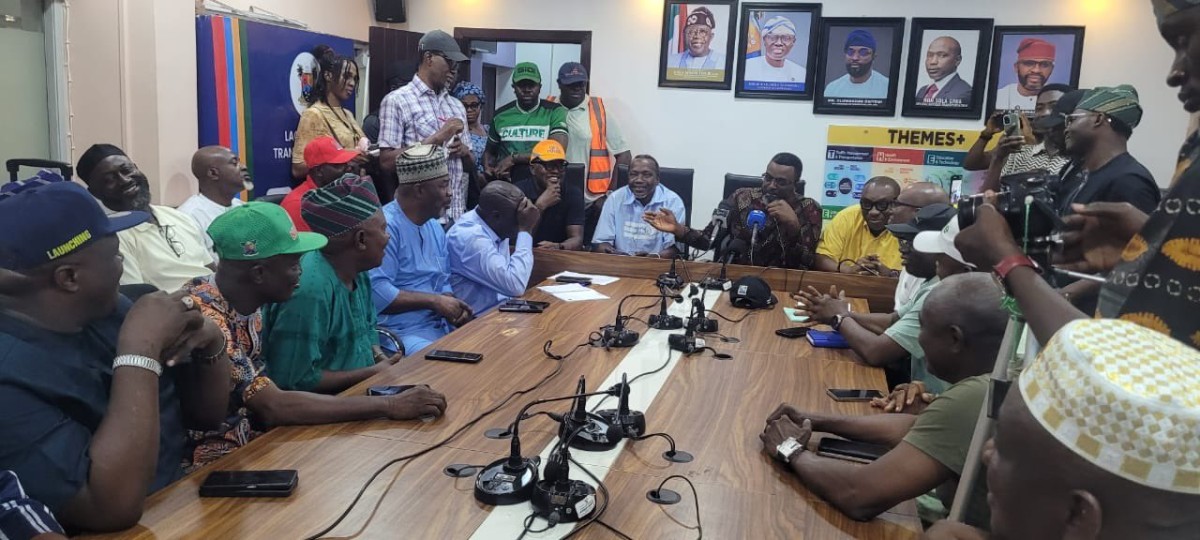
At a stakeholders’ meeting convened by the Ministry of Transportation and the Lagos State Waste Management Authority (LAWMA) on Saturday, June 20, officials unveiled plans to establish a “Waste Police” — a monitoring unit drawn from members of the National Union of Road Transport Workers (NURTW) and Road Transport Employers Association of Nigeria (RTEAN) — to patrol motor parks, garages and surrounding communities and deter indiscriminate refuse dumping.
EDITOR’S PICKS
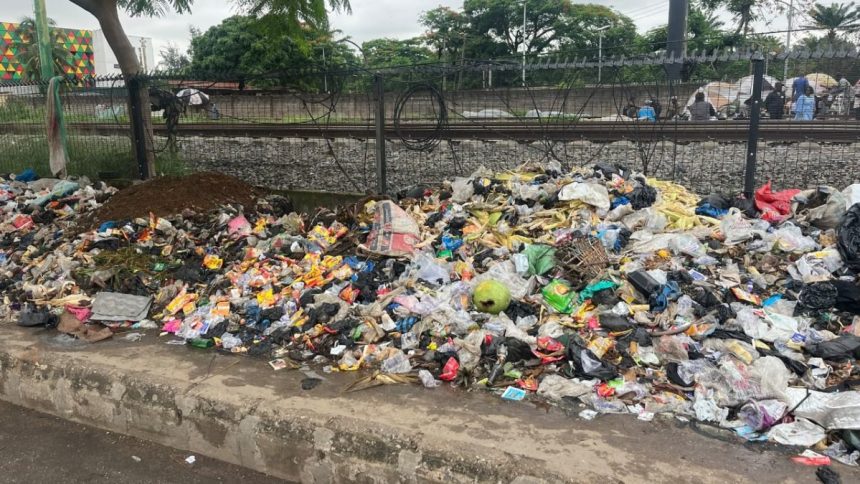
The announcement came as LAWMA trucks fanned out across the state have struggled to clear the heaps of refuse that had accumulated on road medians and pavements from Mushin to Ketu, from Surulere to Iyana Isolo — the product of what residents described as weeks of missed collections.
Snapshot from Lagos today….
1&2: idimu- egbeda road
3&4 ikeja(Oba akinjobi street GRA)
5+…idimu Egbeda road
Eko oni baje o https://t.co/qqhxpM546v pic.twitter.com/gvQOvNov32
— Oluwanifise (@Oluwanifise13) June 22, 2026
The government was responding to a crisis. The question is whether its response addresses the right problem. EKO HOT BLOG unpacks this question.
A City Drowning in Its Own Waste
The scale of Lagos’s waste challenge is staggering. LAWMA and its network of 442 licensed Private Sector Participation (PSP) operators evacuated approximately 418,500 tonnes of waste in May 2026 alone — an average of 13,200 tonnes daily. To put that in perspective, sanitation authorities in Saudi Arabia recorded roughly 472 tonnes of waste over the entire five-day 2026 Hajj pilgrimage, according to Commissioner for Environment and Water Resources, Tokunbo Wahab. Lagos produces that in under an hour.
Yet the system is visibly buckling. Residents across the state reported PSP operators going absent for weeks at a stretch. One Surulere resident said his operator had not visited in three weeks despite collecting ₦10,000 monthly.
The operators, for their part, blamed waterlogged conditions at the Olusosun dumpsite — where trucks were reportedly spending up to four days before offloading — and rising diesel and maintenance costs.
LAWMA itself deploys only 77 compactor trucks and five skip trucks across the entire state. The infrastructure is simply not keeping pace with a megacity of nearly 27 million people.
The Wrong First Step
Against this backdrop, a Waste Police is not a bad idea. It is just the wrong place to start.
The implicit assumption behind the initiative is that Lagos’s refuse crisis is primarily a behavioural problem; that people are dumping trash on roads because they lack civic discipline and need monitoring.
For some residents, that is true. But for many others, it is not the full story. When a PSP operator vanishes for a month and a household’s waste has nowhere to go, the road median is not a choice freely made. It is the only option available. Deploying Waste Police to catch those residents is punishing people for a failure that is not entirely theirs.
Sustainable waste management — reliable collection schedules, functional disposal infrastructure, expanded fleet capacity, more street-level bins — must come first.
LAWMA has acknowledged as much, recruiting 300 environmental health officers for ward-level deployment and trialling tricycle compactors in areas where large trucks cannot reach. These are the right instincts. They need to be the primary strategy, not the footnote.
Enforcement Has Its Place, But Not Yet
None of this is to say accountability does not matter. It does. Lagos has laws against indiscriminate dumping. Last year, over 1,000 arrests were made for environmental violations and 447 offenders prosecuted. That enforcement architecture exists and should be strengthened, but it works best as a complement to a functioning system, not a substitute for one.
The Waste Police, if properly constituted, can eventually serve as a meaningful deterrent for residents who dump trash out of habit rather than necessity. But that conversation belongs after the government has held up its own end: regular collection, adequate infrastructure, accountable PSP operators.
FURTHER READING
Fix the system first. Then police the offenders.
Philip Ibitoye is a Special Correspondent with EKO HOT BLOG. Click here to find daily analysis and critical insight on trending issues in Lagos and other parts of Nigeria.
Click to watch the video of the week below: