
- FG Introduces 80% Practical Training in New Agricultural Curricula
- Says New Agricultural Curricula Will Prepare Nigerian Youths for Jobs
- Assured that the Ministry would work with NBTE, tertiary institutions, industry players and other stakeholders to ensure effective implementation of the new curricula
The Federal Government has announced a major shift in agricultural education, with tertiary institutions expected to adopt an 80 per cent practical training and 20 per cent theoretical approach under newly reviewed curricula.
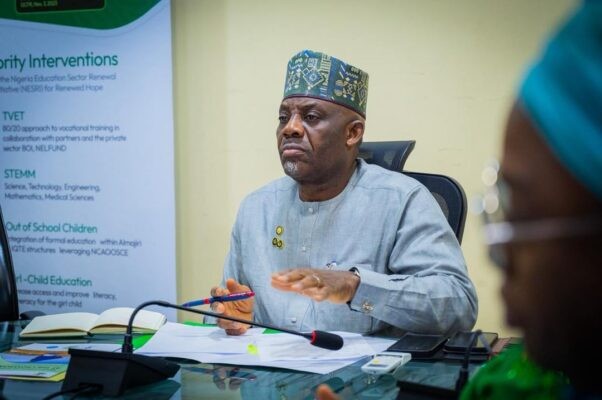
Eko Hot Blog reports that the Minister of Education, Dr. Maruf Tunji Alausa, disclosed this on Thursday while receiving the report of the National Implementation Committee on the Review and Development of Agricultural Curricula for Tertiary Institutions in Nigeria.
EDITOR’S PICK
- Beyond the Glamour: The Hidden Price Celebrities Pay for Looking Perfect
- Hamzat Gives Condition for Reconstruction of Alaba Market Roads
- Lagos Must Prepare for Next Pandemic, Health Commissioner Warns
Alausa said the reform was designed to equip Nigerian youths with practical skills needed to participate effectively in agriculture and transform the sector into a more skills-based and productive area of the economy.
He described the shift as a significant departure from the previous model, which placed 70 per cent emphasis on theory and 30 per cent on practical training.
According to him, the new 80:20 structure will give students greater hands-on experience and ensure that agricultural education produces skills that can be applied beyond the classroom.
The minister expressed optimism that the revised approach would strengthen the agricultural workforce, improve capacity and help translate education and training into productive activities that contribute to national development.
He, however, stressed that successful implementation would require adequate preparation, including sensitisation of industry players, academics, teachers and other stakeholders.
Alausa also called for proper training of teachers and adequate support for institutions to effectively implement the revised curricula.
Speaking earlier, the Minister of State for Education, Professor Suwaiba Sa’id Ahmad, commended members of the committee and other stakeholders involved in the review.
She acknowledged the contributions of the National Board for Technical Education, the Skills Council, industry representatives and academics, saying their collaboration strengthened the process.
Ahmad urged the government and relevant institutions to properly communicate the reforms to stakeholders and the public, particularly the increased emphasis on practical training.
Presenting the report on behalf of the committee, the Executive Secretary of the National Board for Technical Education, Professor Idris Muhammad Bugaje, disclosed that the exercise produced 36 new and reviewed National Diploma and Higher National Diploma curricula, 3 National Certificate in Education curricula and 31 National Occupational Standards.
He said 27 of the occupational standards were developed from scratch, while 4 existing standards were reviewed.
Bugaje said the exercise had been completed and the resulting documents considered and approved by the relevant regulatory bodies.
He added that the complete set of reviewed curricula would be formally presented at a later public event.
Alausa assured that the Ministry would work with NBTE, tertiary institutions, industry players and other stakeholders to ensure effective implementation of the new curricula.
He said the ultimate objective was to equip young Nigerians with practical skills, strengthen the agricultural sector and convert Nigeria’s agricultural potential into productive economic opportunities under President Bola Ahmed Tinubu’s Renewed Hope Agenda.
FURTHER READING
- How Lagos Achieved 57.4% Exclusive Breastfeeding Rate
- Nigeria Has Joined WEC to Lead, Not Just Participate – Tinubu
- Alausa Reviews NESRI Progress, Sets Fresh Push for Outstanding Deliverables
Click here to watch video of the week