- Oshiomhole said fears over the use of subsidy savings drove him to protest against Obasanjo’s administration
- He said the government lacked the structures to distribute the benefits fairly to Nigerians
- Oshiomhole recalled mobilising workers, students and residents in Ogun State against the policy
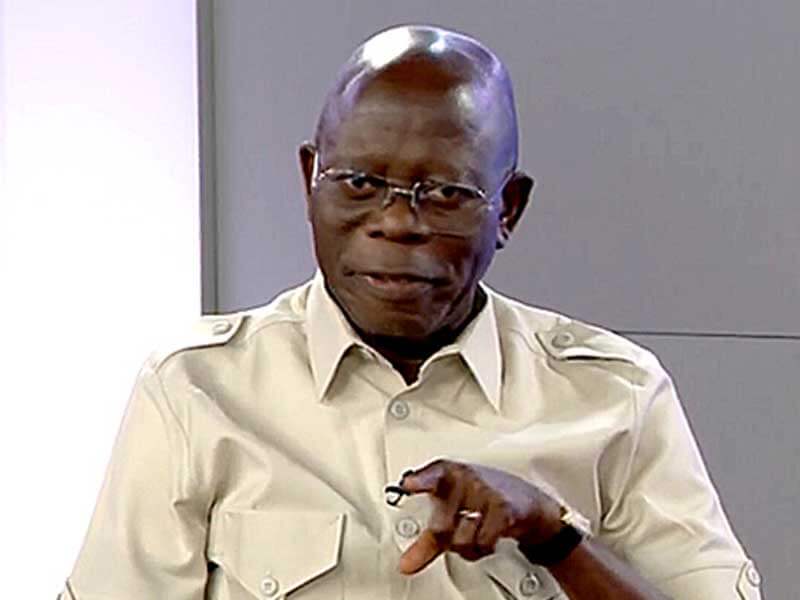
Senator representing Edo North, Adams Oshiomhole, has revealed that concerns over the management and distribution of funds saved from fuel subsidy removal prompted him to mobilise residents of Ogun State against the administration of former President Olusegun Obasanjo.
Eko Hot Blog gathered that the Oshiomhole made the disclosure at the seventh national discourse organised by The Companion, an association of Muslim men in business and the professions, at the University of Lagos.
EDITOR’S PICK
- Tinubu Directs Installation of 3,700 Telecom Towers Across Nigeria
- Alara of Ilara Praises Sanwo-Olu, LASU Staff’s Dedication To Progress
- Burna Boy, Tems Bag Nominations at 2026 MTV VMAs
The event, themed “Nigeria’s Political Landscape and The Ethno-Religious Divides,” was chaired by former Kano State Governor Ibrahim Shekarau, while Lagos State Deputy Governor Obafemi Hamzat attended as the special guest of honour.
Reflecting on his time as President of the Nigeria Labour Congress, Oshiomhole said he travelled to Abeokuta, Ogun State, to rally opposition to Obasanjo’s plan to remove the petrol subsidy.
He explained that his objection was not simply to the removal of the subsidy but to the government’s ability to ensure that the resulting savings reached ordinary Nigerians.
According to him, he believed the Obasanjo administration had the capacity to withdraw the subsidy but lacked the necessary structures to distribute the benefits fairly.
Oshiomhole recalled that he mobilised residents, workers and students in Ogun State, including Afolabi Salisu, who currently chairs the Senate Committee on ICT and Cybersecurity, to participate in the protest.
He said the demonstrations also attracted members of the University of Lagos community, including workers and students, who joined the wider campaign against the policy.
Oshiomhole said, “When I was NLC President, I went to Abeokuta and told the people that the subsidy could be removed, but the government did not have the capacity to return the benefits to the poor.”
He argued that the government’s ability to withdraw the subsidy did not automatically mean it had the mechanisms required to fairly redistribute the resulting resources.
The former Edo State governor maintained that the absence of effective systems for sharing the proceeds was the major reason he opposed the policy at the time.
He also recalled that the protests attracted significant support from workers and students, while university authorities largely maintained a neutral public position.
Oshiomhole’s comments come amid renewed national debate over fuel subsidy removal, with political leaders divided over whether the policy should be maintained, reversed or redesigned to cushion its impact on Nigerians.
FURTHER READING