- Chinese Foreign Minister Wang Yi and Russian Foreign Minister Sergey Lavrov held high-level talks to synchronize their approach to the deteriorating security situation in the Middle East.
- Both nations emphasized that regional stability and the security of vital navigation routes, such as the Strait of Hormuz, are dependent on an immediate cessation of hostilities.
- As permanent members of the UN Security Council, Beijing and Moscow pledged to uphold “fairness” and push for an objective, balanced international response to the conflict.
The foreign ministers of China and Russia have engaged in urgent diplomatic consultations to address the escalating conflict in the Middle East, signaling a unified front among the two global powers.
Eko Hot Blog reports that in a phone conversation between Chinese Foreign Minister Wang Yi and his Russian counterpart, Sergey Lavrov, both diplomats expressed deep concern over the “current situation,” which they described as continuing to deteriorate with no immediate sign of de-escalation.
EDITOR’S PICKS
- Judge Frees 37 Inmates Over Prolonged Detention in Akwa Ibom
- Trump Threatens Iran Over Energy Attacks
- Tinubu Excludes Kemi Badenoch from UK State Visit Itinerary
The discussions were highlighted by China’s Ambassador to the UN, Fu Cong, who underscored the necessity of a coordinated international effort to restore peace.
Wang Yi noted that as permanent members of the UN Security Council, China and Russia bear a unique responsibility to uphold global stability.
He called for both nations to adopt a balanced approach that focuses on “matters of right and wrong” while striving for broader understanding and support from the international community.
According to Ambassador Fu, the Chinese leadership believes that the only fundamental way to address the growing threats to international navigation, particularly in the strategically vital Strait of Hormuz, is to achieve a comprehensive ceasefire and end the fighting as soon as possible.
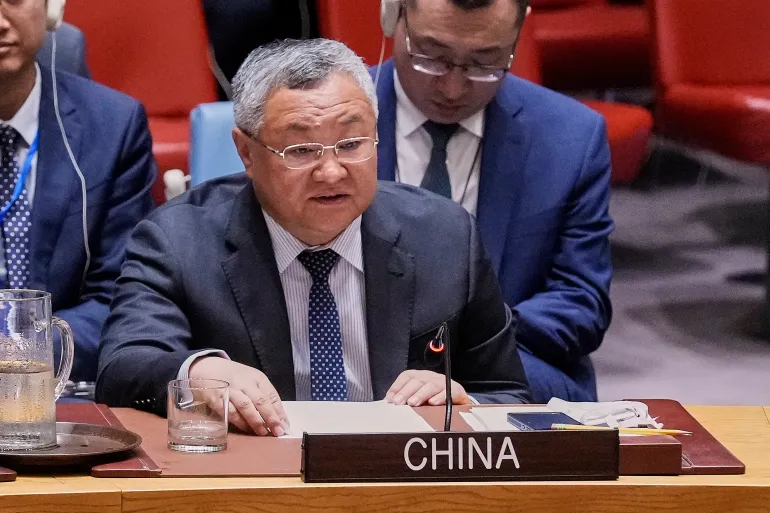
Echoing this sentiment, Sergey Lavrov voiced Moscow’s grave concern regarding the “continuing escalation” of military operations.
The Russian Foreign Ministry’s position remains firm that all military actions must cease immediately to prevent a wider regional catastrophe.
Both ministers agreed that the spillover effects of the current fighting are reaching a critical point, threatening not only regional players but also global trade and security.
The diplomatic push comes at a time when the UN Security Council faces increasing pressure to move beyond rhetoric and implement a viable roadmap for peace.
Ambassador Fu Cong’s public address in New York underscored Beijing’s stance that the “fundamental way” forward is through diplomacy rather than expanded military engagement.
As two of the most influential voices on the Security Council, the alignment of China and Russia on this issue is expected to shape upcoming debates and resolutions aimed at cooling the volatile situation in the Middle East.