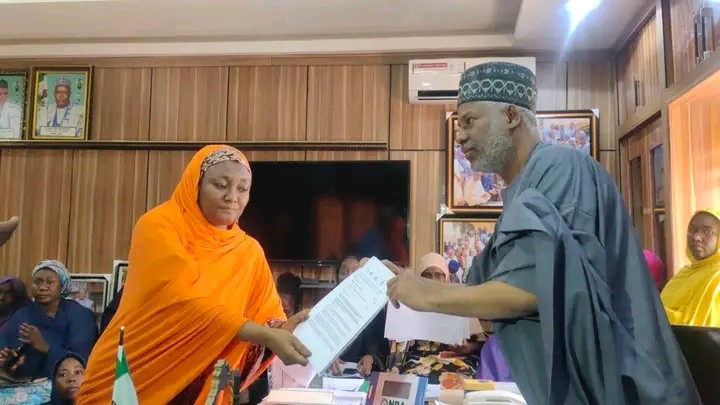
- The Speaker of the Katsina State House of Assembly, Nasiru Daura, has pledged his full support for the expedited passage of the Special Seats for Women Bill.
- Hundreds of women, led by the International Federation of Women Lawyers (FIDA), stormed the Assembly complex on Thursday to demand an end to female underrepresentation in governance.
- The bill seeks to create reserved seats for women in the National and State Houses of Assembly, aiming to pull Nigeria up from its current ranking of having less than 5% female representation in elective positions.
The push for gender parity in Nigerian politics gained significant momentum on Thursday as the Katsina State House of Assembly committed to fast-tracking a landmark constitutional amendment.
Eko Hot Blog reports that speaker Nasiru Daura addressed a large gathering of women’s rights groups, assuring them that the House would prioritize the “Special Seats for Women Bill” to ensure it reaches Governor Dikko Umaru Radda’s desk for assent.
EDITOR’S PICKS
- Judge Frees 37 Inmates Over Prolonged Detention in Akwa Ibom
- Trump Threatens Iran Over Energy Attacks
- Tinubu Excludes Kemi Badenoch from UK State Visit Itinerary
The demonstration was led by Baraka Suleiman, Chairperson of FIDA, who presented a formal petition highlighting a stark reality: despite making up nearly half of the population, women remain a marginalized voice in the legislative process.
Nigeria currently holds one of the lowest rankings in Africa for women’s political inclusion. The petition noted that similar “special seat” models have already been successfully implemented in countries like Rwanda, Kenya, South Africa, and Uganda.
“Women are nation builders, and we must do all we can for their success,” Daura stated, responding to the advocates’ plea for an emergency sitting.
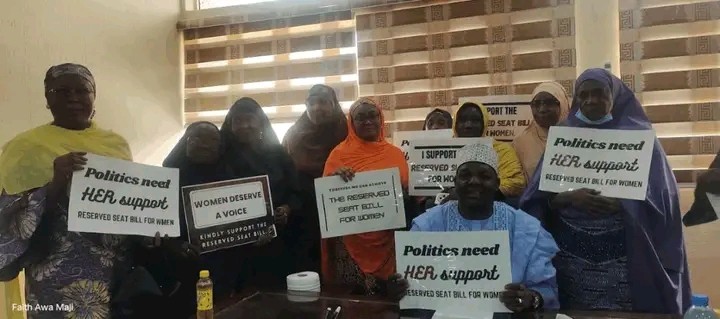
The bill represents a renewed attempt to pass legislation that failed to secure the necessary two-thirds majority in the 9th and 10th National Assemblies.
Advocates argue that the bill is not just about fairness, but about effective governance. Greater female representation is statistically linked to better outcomes in healthcare, education, and poverty reduction.
Hannatu Mohammad, Chairperson of the Nigeria Association of Women Journalists (NAWOJ) in Katsina, described the move as “timely,” noting that a parliament reflecting the country’s true demographics is inherently more legitimate and accountable.
With off-cycle elections approaching and the 2027 general election cycle on the horizon, the Katsina Assembly’s stance sets a potential precedent for other northern states to follow suit in domesticating international agreements like the Maputo Protocol.