- During the session, lawmakers are expected to deliberate on proposed changes to the socialist constitution
- The assembly will also review progress on the nation’s current five-year economic development plan
- In recent years, North Korea has shifted away from its long-standing objective of peaceful reunification
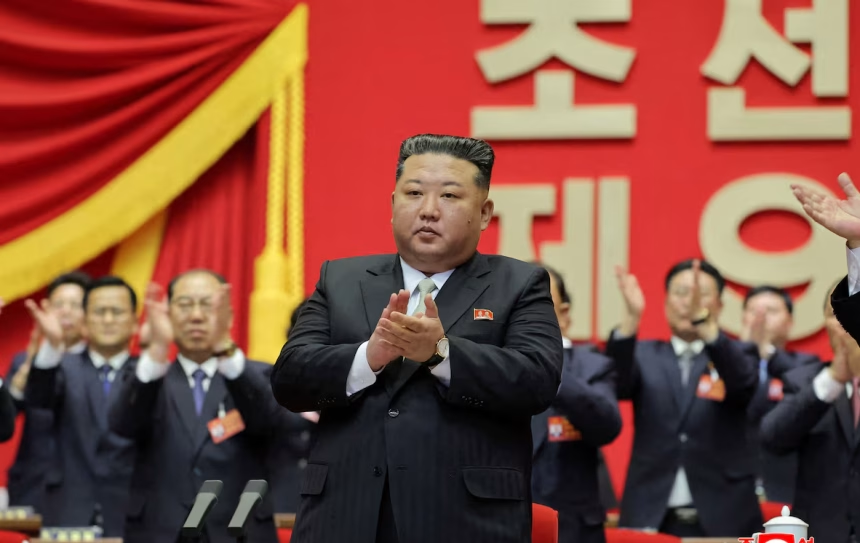
Kim Jong Un has been reappointed as President of State Affairs, according to the state news agency Korean Central News Agency, following the opening session of the country’s Supreme People’s Assembly in Pyongyang.
Eko Hot Blog gathered that the gathering marked the first of the legislature, which is widely regarded as a body that formalizes decisions made by the ruling Workers’ Party of Korea.
EDITOR’S PICK
- Why Return of Lagos Monthly Sanitation Exercise is Long Overdue
- Four Killed as Truck Crashes Into Bus on Lekki–Epe Expressway
- Uzodimma: Tinubu Reforms Prevent Fuel Crisis
During the session, lawmakers are expected to deliberate on proposed changes to the socialist constitution and confirm key leadership positions, including the head of the State Affairs Commission.
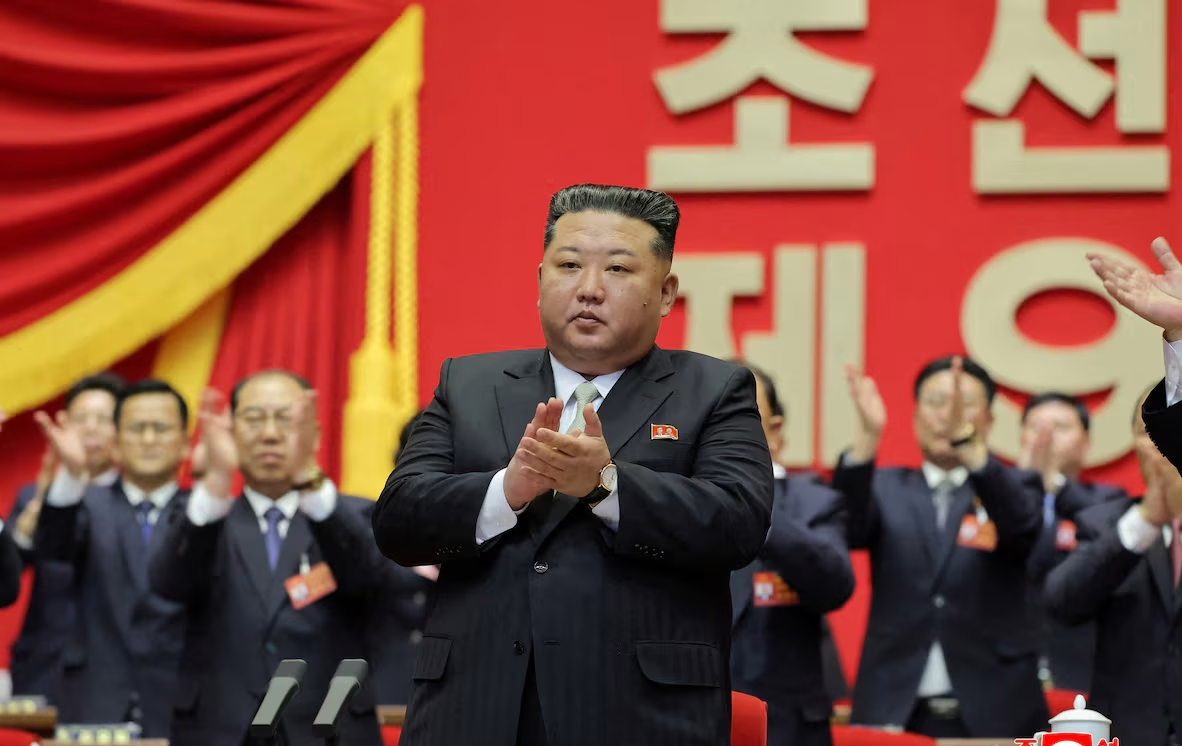
The assembly will also review progress on the nation’s current five-year economic development plan, introduced earlier this year at the party congress.
Observers are closely watching whether constitutional revisions will reflect Kim’s increasingly firm stance toward South Korea.
In recent years, North Korea has shifted away from its long-standing objective of peaceful reunification, instead defining the South as an adversarial state.
Meanwhile, Kim Yo Jong, the leader’s influential sister, was absent from the latest list of members of the State Affairs Commission, the country’s top governing body, where she had served since 2021.
Officials in South Korea are seeking clarification on her omission, though analysts suggest it may reflect a strategic redistribution of responsibilities rather than a reduction in her influence.
Experts note that she continues to hold significant authority within the ruling party, where she is believed to play a key role in shaping and coordinating policy.
FURTHER READING