- 18 Pregnant Women, 10 Children Rescued as NSCDC Storms Lagos Baby Factory
- Investigations revealed that after delivery, the babies were taken from the women and sold to interested buyers
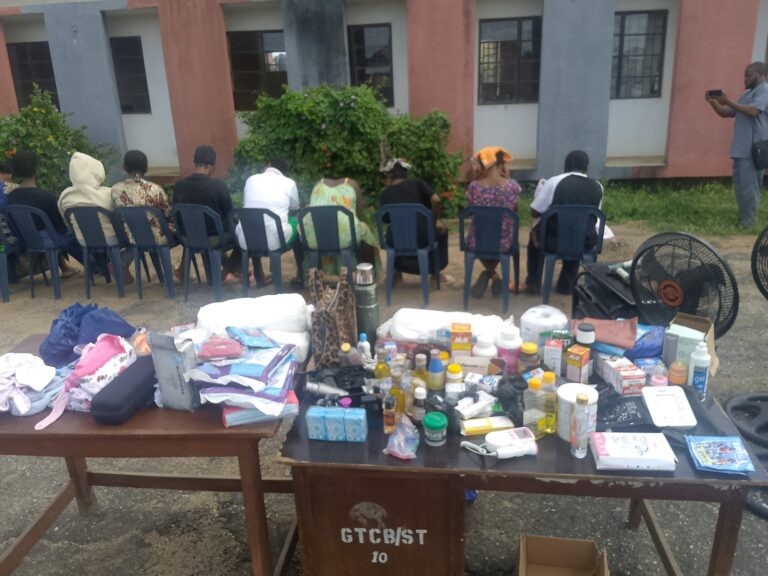
- Items recovered from the facility included a generator, gas cylinders, mobile phones, baby care products, and other household supplies
Operatives of the Nigeria Security and Civil Defence Corps, Lagos State Command, have uncovered a baby factory in the Badagry area of Lagos, rescuing 18 pregnant women and 10 children during a late-night operation.
Eko Hot Blog reports that the raid, carried out in Okuju, Ilado, led to the arrest of two suspects; Joy Okeke and Raphael Agwu who allegedly ran the facility.
EDITOR’S PICK
- Urbanisation Not a Threat to Indigenous Identity – Sanwo-Olu
- Lagos Expands Rail Network with New 24-Car Trains for Red Line
- ‘I Won’t Back Down’ – Tinubu Speaks Tough as 2027 Race Looms
According to the Lagos NSCDC Commandant, Adedotun Keshinro, the operation followed three weeks of intelligence gathering.
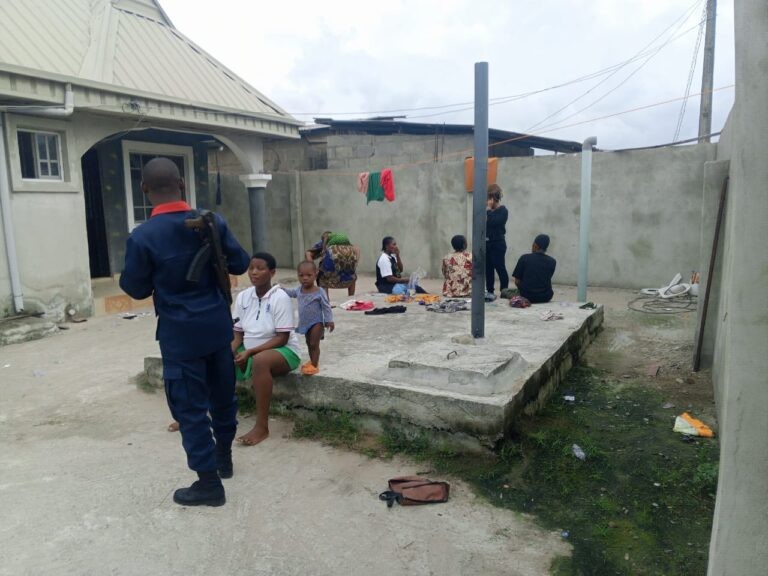
He explained that the facility was used to house pregnant women who were allegedly recruited through social media platforms, including Facebook, with promises of financial rewards.
Investigations revealed that after delivery, the babies were taken from the women and sold to interested buyers, while the mothers were paid between ₦500,000 and ₦1.8 million.
Keshinro described the operation as exposing a “grievous crime against humanity,” noting that the victims, aged between 18 and 30, were not allowed to leave the premises freely.
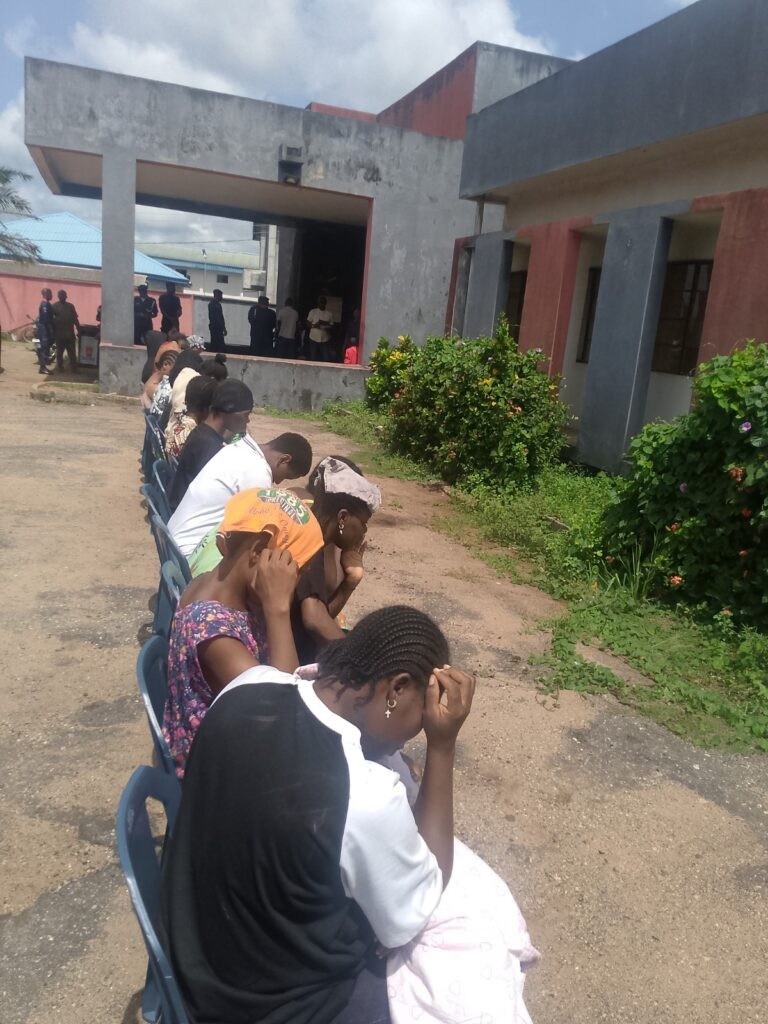
Among those rescued were women who had arrived with their own children, some of whom were also reportedly being negotiated for sale. One of the pregnant victims was said to have suffered a miscarriage.
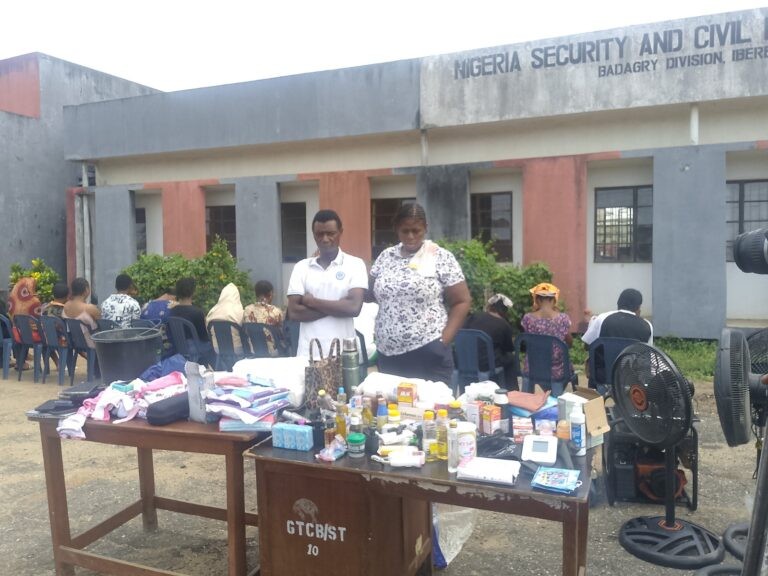
The victims were later paraded at the NSCDC office in Badagry, while the suspects are expected to be handed over to the police for prosecution. The rescued women will be transferred to the National Agency for the Prohibition of Trafficking in Persons for further care and rehabilitation.
Items recovered from the facility included a generator, gas cylinders, mobile phones, baby care products, and other household supplies.
Speaking to journalists, some of the victims said they willingly joined the arrangement after being contacted online, agreeing to give up their babies in exchange for money.
One of the suspects claimed the operation was a form of “adoption” service for childless couples, though authorities have rejected the justification and classified the activities as illegal.
Keshinro added that the property would be handed over to the Lagos State Government, which may decide to demolish it to prevent further criminal use.