- Makoko Residents Protest as Lagos Government Continues Demolitions
- Government officials continued removing structures despite protest
- Omotoso said the government had engaged the residents for over five years
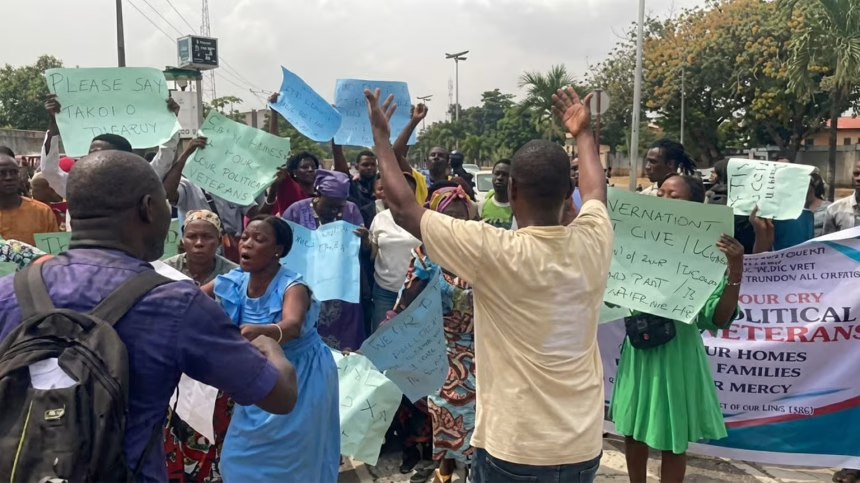
Residents of Makoko’s Ilaje Aiyetoro Community in Yaba LCDA staged a protest at the Lagos State House of Assembly on Tuesday, blocking part of the road in opposition to ongoing government-led demolitions.
Eko Hot Blog reports that the demonstrators urged the Lagos State Government to limit the demolition to a 100-metre area, warning that a broader operation would render many families homeless.
EDITOR’S PICK
- Court Remands Portable Over Assault, Theft Charges
- Uganda Orders Internet Shutdown Ahead of Election
- Truck Crash into Church: Epe LG Chairman Calls for Calm, Assures Community Support
They stressed that the exercise was destroying livelihoods and threatening the welfare of their families, particularly in a community where residents rely on fishing and small-scale trading.
Despite the protest, government officials continued removing structures, suggesting the demolition was targeting a wider area beyond just buildings under high-tension power lines. Thousands of Makoko residents are estimated to be affected by the operation.
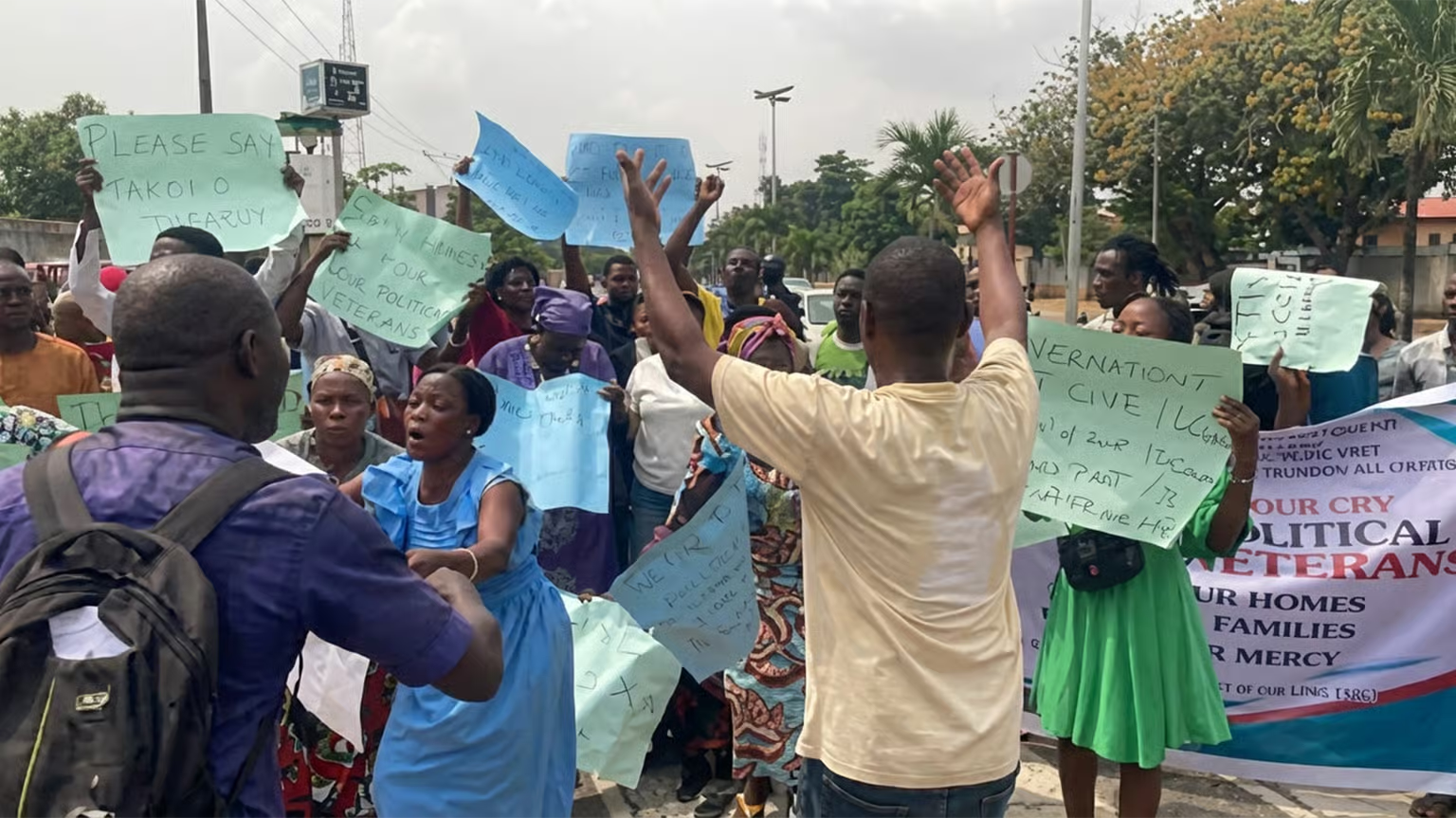
The waterfront community has faced repeated evictions and demolitions over the years. Civil society organisations, including the Justice Empowerment Initiative and the Nigerian Slum/Informal Settlement Federation, condemned the ongoing evictions.
Responding, Lagos State Commissioner for Information and Strategy, Gbenga Omotoso, said the government had engaged the residents for over five years and that the exercise was primarily about safety and compliance with regulations. He stressed that buildings must be at least 250 metres away from high-tension power lines, and that the government had already reduced this requirement to 100 metres, then 50 metres, while removing structures in those zones.
Omotoso added that while residents have the right to protest, no compensation could be provided for illegal structures, emphasizing that allowing them would encourage further violations of city planning and safety laws.